
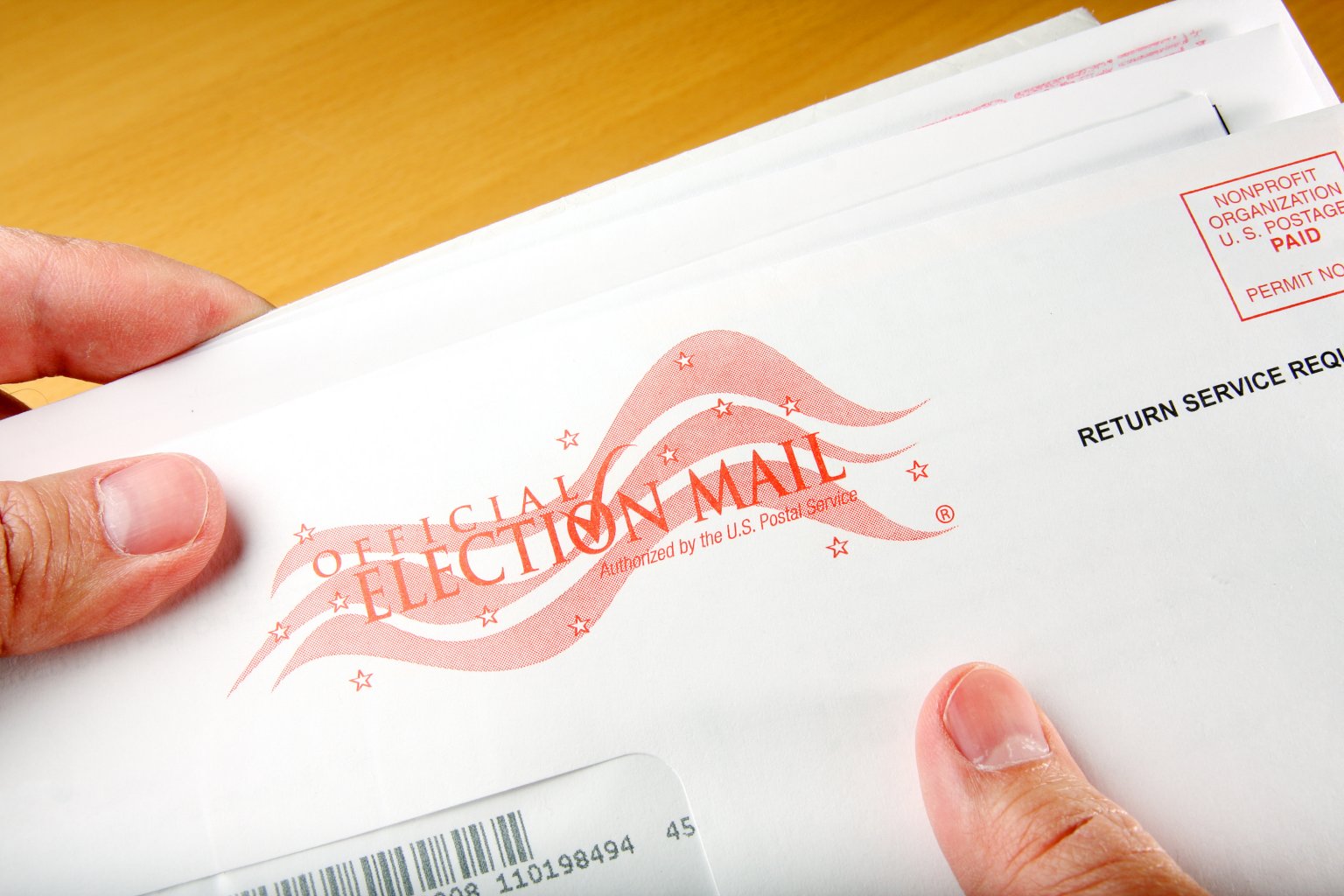
Policy Summary: In 2024 prior to the United States elections the Republican National Committee and the Trump Campaign filed numerous legal challenges that sought to invalidate mail voting ballot receipt grace periods.
A mailed voting ballot receipt grace period is when a state permits a certain number of days after Election Day for receipt of a mail ballot in order for the mail ballot to be counted. Many states have different grace periods, ranging from three days to as many as seven days. One condition for the grace period is that the mailed ballot be postmarked by Election Day at the latest even though it ends up being received a number of days after Election Day.
Many of the legal challenges brought by the Trump Campaign and the Republican National Committee (RNC) in the various states were dismissed. However, the Fifth Circuit Court of Appeals ruled for the Trump Campaign and the RNC. The appeals court overturned a lower court ruling and found that “acceptance of ballots ends on the ‘Election Day’ designated by Congress.” The case was then sent back to the lower court but the case was then appealed to the United States Supreme Court.
In the case Watson v. Republican National Committee, the Supreme Court ruled 5 – 4 that states are permitted to count mail in ballots postmarked by Election Day yet received afterward. The majority opinion was written by Justice Amy Coney Barrett and joined by Chief Justice John Roberts and Justices Sonia Sotomayor, Elena Kagan and Ketanji Brown Jackson. LEARN MORE
Policy Analysis: The decision in Watson v. Republican National Committee is a ruling that helps preserve a state’s authority over the conduct of elections although the case does have bigger implications for nationwide federal elections.
This decision turned on the definition of Election Day and the word “election.” Justice Barrett wrote that an election is when the electorate chooses their preferred candidate. This means that voting and an election is “made when voting is complete, not when ballots are received.” So when ballots are postmarked before Election Day that means their voting is complete. And since no federal laws mention any limitation or deadline as to when mail – in ballots are to be received then states are free to count mail in ballots postmarked before Election Day but are received afterward.
Justice Samuel Alito tried to argue that election and Election Day mean that the collective choice of the electorate must be done all on Election Day because this was how ballots were received and counted when voting was done in person. However, Justice Barrett pushed back on this perspective by stating that even though we have 19th century voting laws does not mean that we should follow 19th century voting practices since polls were only open on Election Day in the nineteenth century. Historical practice should not control modern day voting realities, e.g. the use of mailed and absentee ballots.
While the Justices were debating how to interpret words such as Election Day and election, the case was significant because of the effect it could have on upcoming future national elections. Many Republicans, including the Trump Administration, have always bemoaned the counting of mailed ballots received after Election Day. Ballots counted after that day have traditionally favored Democratic candidates and has led to numerous conspiracy theories that mailed ballots are being manipulated to favor Democratic candidates. Had the Supreme Court ruled the other way, it is conceivable that election officials could disqualify a significant number of votes for the simple reason they were received after Election Day. A voter could have followed every rule or procedure to vote and mail their ballot and have it postmarked by Election Day but then have it disqualified for reasons beyond their control. An opposite ruling here could have been a significant boon to Republican candidates. In Washington state, Secretary of State Steve Hobbs stated that as many as 250,000 mailed ballots were postmarked by Election Day but received afterwards and could have been disqualified for the 2024 election. The receipt of mail in ballots has also been one that the Trump Administration has championed because of their embrace of election conspiracy theories. But with the decision from Watson v. Republican Committee the case will help to hopefully counter the conspiracy theory that counting mailed ballots after Election Day is somehow wrong or nefarious when it is not. LEARN MORE
Take Action
- SCOTUSblog – blog analyzing the Watson v. Republican National Committee decision.
- American Civil Liberties Union – advocacy group’s press release on Watson case.